Gas Line Installation in Las Vegas, NV
Whether you're adding a gas appliance inside, building an outdoor kitchen, hooking up a fire pit, or upgrading a line that can't keep up with a new tankless water heater — Royalty Plumbing installs residential gas lines across the Las Vegas Valley, fully permitted and pressure tested.



What Is Gas Line Installation in Las Vegas?
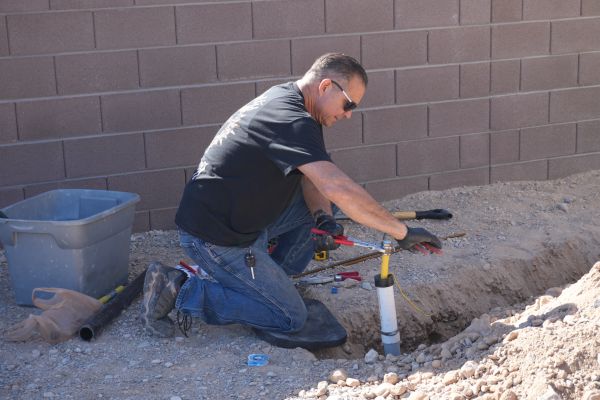
Gas line installation in Las Vegas is the process of running new natural gas piping from your existing supply line to a new appliance, outdoor living area, or additional location in your home. Southwest Gas supplies natural gas to residential customers throughout the Las Vegas Valley. Once the gas reaches your meter, everything past it — inside the home and in the yard — is your responsibility and must be installed by a licensed plumber, permitted through the City of Las Vegas or Clark County, pressure tested, and inspected before the gas is turned on. Common residential gas line installations in Las Vegas include new appliance hookups, outdoor BBQ and kitchen islands, fire pits, pool and spa heaters, gas dryers, tankless water heater upgrades, and whole-home generator connections. Royalty Plumbing handles the full scope — layout, permitting, installation, pressure testing, and inspection coordination — for gas line projects of any size across the Las Vegas Valley.
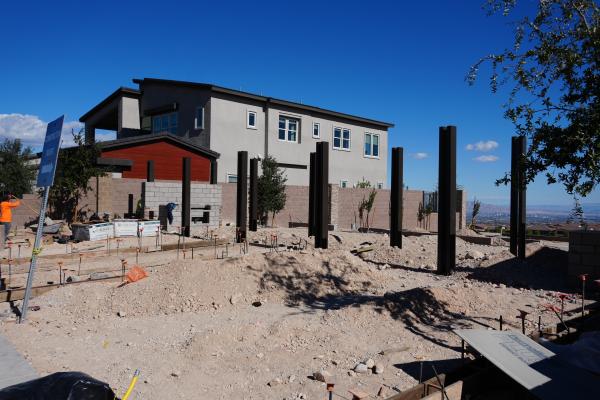
Gas Line Installation Services in Las Vegas
Las Vegas is one of the best markets in the country for gas line work — 300+ sunny days means outdoor living areas get used year-round, and natural gas is significantly more cost-effective than electricity for most high-demand appliances. Here is what we install gas lines for:
Indoor Appliances
- Gas ranges and cooktops — Adding or relocating a gas range from the existing supply
- Gas dryers — Converting from electric or adding a new gas connection for a dryer
- Gas furnaces and HVAC — Supply line installation or upsizing for heating system replacements
- Tankless water heater upgrades — Converting to tankless almost always requires a larger-diameter gas line; the existing line that served your tank unit typically can't meet a tankless unit's BTU demand
- Gas fireplaces and inserts — New line runs to living room or bedroom fireplace installations
- Whole-home standby generators — Permanent gas connection so your generator runs without propane tanks
Outdoor Living (Las Vegas's Biggest Gas Line Category)
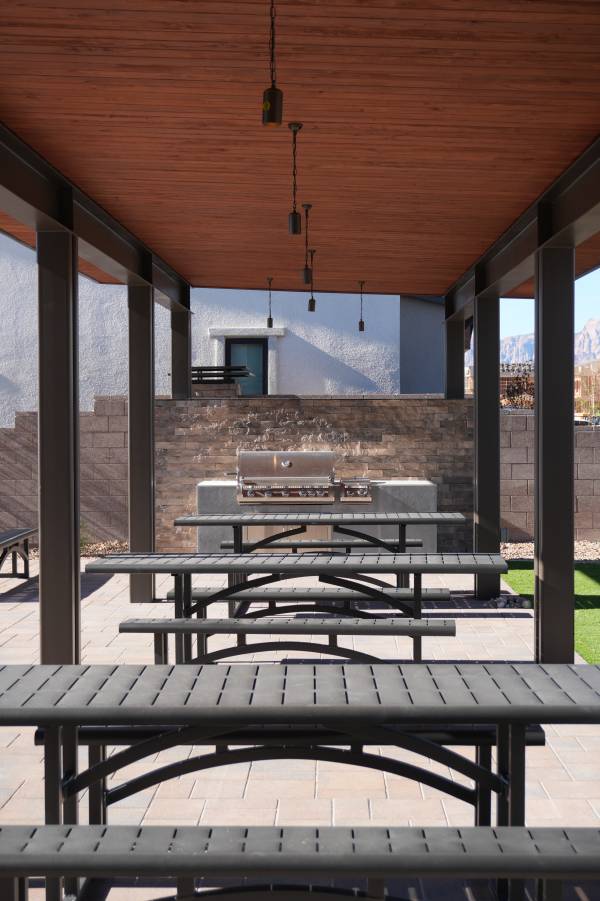
- BBQ islands and built-in grills — Permanent gas hookup eliminates propane tank swaps; properly sized for your grill's BTU rating
- Outdoor kitchens — Multi-appliance runs serving a grill, side burner, and infrared heater off a single supply branch
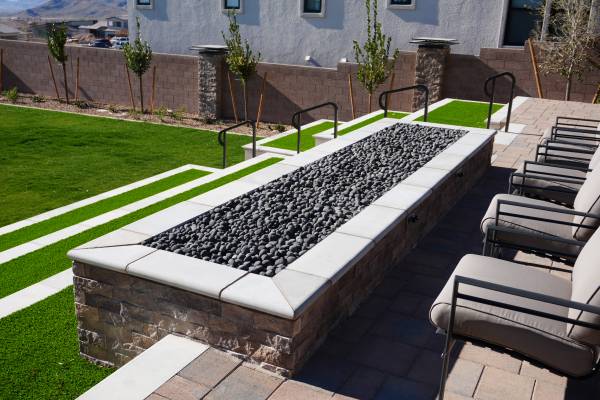
- Fire pits and fire tables — Buried or surface-run supply lines with dedicated shutoff valves and drip legs
- Outdoor fireplaces — Gas insert or burner supply lines for covered patio fireplaces
- Pool and spa heaters — Gas line run to the equipment pad, sized for the heater's BTU requirement; one of the most common gas line jobs in the Valley
- Patio and overhead heaters — Permanent supply lines for infrared or radiant heaters on covered patios
Note on propane: Most Las Vegas homes are on Southwest Gas natural gas service. If your home uses propane, we can still run the piping — but the supply, tank, and regulator side involves coordination with your propane provider.
Why Las Vegas Homeowners Add or Upgrade Gas Lines
- Upgrading to a Tankless Water Heater is one of the most common gas line jobs we do. Tankless water heaters require significantly more gas than the tank units they replace — a whole-house gas tankless unit may need 199,000 BTUs or more at peak, versus 36,000–40,000 BTUs for a typical 50-gallon tank unit. The existing ¾-inch line that fed your old tank is often undersized for a high-output tankless unit. Failing to upsize the gas supply line is one of the most common reasons a newly installed tankless water heater underperforms or fails to fire at full demand. We assess and upsize the supply line as part of every tankless water heater installation or standard water heater installation we perform.
- Building an Outdoor Kitchen or BBQ Island, Las Vegas homeowners use their backyards twelve months a year. Permanent gas lines to outdoor kitchens, built-in grills, side burners, and fire features eliminate the cost and inconvenience of propane tanks and give you the full BTU output your grill was designed to deliver. A properly sized and permitted outdoor gas line is also a selling feature — it adds documented, inspected value to the home.
- Adding a Pool or Spa Heater, Gas pool heaters are standard equipment in Las Vegas, and existing homes that add a heater for the first time need a new gas line run to the equipment pad. The BTU rating of pool heaters (typically 150,000–400,000 BTUs) means line sizing and pressure are critical — a line that's too small will cause the heater to short-cycle or fail to reach temperature.
- Converting Gas Appliances from Propane, Some homes particularly in newer communities at the edges of the Valley were built with propane. As Southwest Gas service extends into those areas, homeowners converting from propane to natural gas need their existing piping inspected and the appliances converted or replaced, since natural gas and propane operate at different pressures and require different orifice sizes.
- Remodeling a Kitchen, Moving a gas range from one wall to another, or adding a gas cooktop where an electric one existed, requires a new line run or extension. Kitchen remodels frequently trigger gas line work, and the project needs to be permitted and inspected before the wall is closed up.
- Every gas line project we handle is fully permitted, pressure tested, and inspected before the gas is turned on.
💡 Las Vegas Homeowner Tip: Whether you're upgrading to a tankless water heater, building an outdoor kitchen, or adding a pool heater — the gas line feeding your new appliance must be properly sized for its BTU demand. An undersized line causes chronic performance problems. Royalty Plumbing calculates BTU load on every project to ensure your gas supply matches the demand.
How Royalty Plumbing Installs a Gas Line in Las Vegas
Every gas line installation follows a structured, code-compliant process.
-
Step 1 — Site Assessment and BTU Calculation
We visit your home, identify the nearest gas supply point, and calculate the BTU demand of every appliance the new line will serve. Pipe sizing is determined by BTU load and run length — undersized pipe is the most common mistake made on gas line installations, and it causes chronic low-pressure problems at the appliance.
-
Step 2 — Permit Application
Gas line installation in Las Vegas requires a permit from the City of Las Vegas Building Division or Clark County, depending on your address. We pull the permit before starting any work. This is non-negotiable — unpermitted gas work is a code violation, voids your homeowner's insurance coverage for gas-related incidents, and creates serious liability issues when you sell the property.
-
Step 3 — Material Selection and Routing
We select the correct pipe material for your project — black iron for most interior runs, CSST (corrugated stainless steel tubing) where flexibility is needed through tight spaces, and polyethylene for underground exterior runs. CSST installations require electrical bonding to the grounding electrode system per Nevada Residential Code Chapter 24, which we include as standard. We plan the most direct, code-compliant route that minimizes penetrations and trench work where possible.
-
Step 4 — Installation
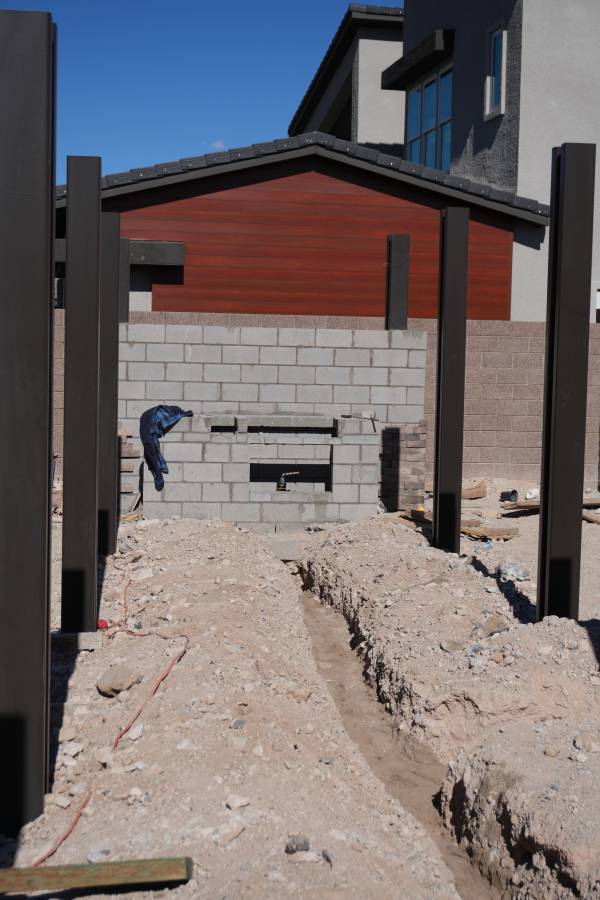
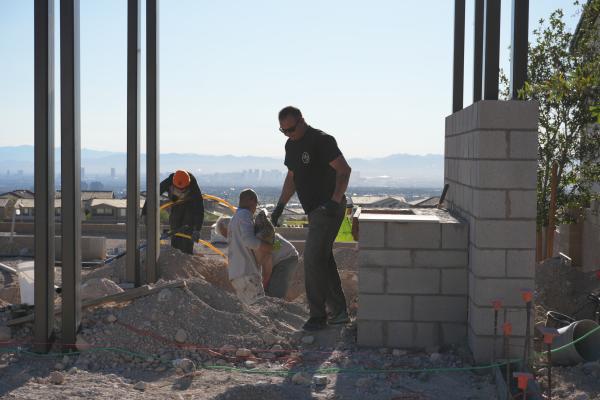
We run the line, install all required shutoff valves (one per appliance is code), drip legs on gas appliances (to capture condensate and debris), and any required flexible connectors at the appliance connection point. For outdoor and underground runs, we trench to the required burial depth — a minimum of 18 inches for service lines under Nevada code — and use polyethylene pipe rated for direct burial.
-
Step 5 — Pressure Test
Every gas line installation we complete is pressure tested before the gas is turned on. We pressurize the system, isolate it, and verify zero pressure drop over the test period. This is the only way to confirm there are no leaks at any fitting, joint, or connection in the new line. A pressure test is required by code and by us — no exceptions.
-
Step 6 — Inspection and Gas-Up
We schedule the required final inspection with the City of Las Vegas or Clark County. After the inspector signs off, we coordinate the gas-up with Southwest Gas if a new meter connection or pressure adjustment is needed, connect the appliance, test operation, and confirm safe flame behavior at the burner.
Gas Pipe Materials — What We Use and Why
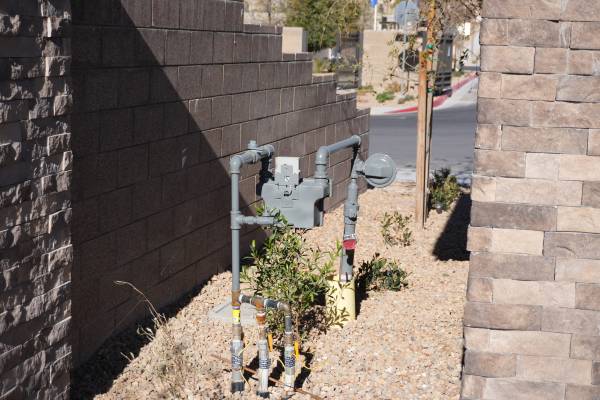
The pipe material used on your gas line project depends on whether the run is indoor or outdoor, above ground or buried, and how much flexibility the route requires. Here is what we use and why:
Black Iron Pipe The most common material for interior gas piping in Las Vegas homes. Black iron is strong, heat-resistant, and forms an airtight threaded connection that holds pressure reliably for decades. It is code-compliant for both above-ground interior and some exterior applications. It requires regular inspection because the external surface can corrode when exposed to moisture, but for most indoor applications it is the standard choice.
CSST (Corrugated Stainless Steel Tubing) A flexible stainless steel pipe that can be routed through wall cavities, attic spaces, and tight areas without the rigid fittings required by black iron. CSST is faster to install in complex interior runs and is code-approved in Nevada. Important: Nevada Residential Code (Chapter 24, Fuel Gas) requires that all CSST installations be electrically bonded to the home's grounding electrode system. This bonding requirement is frequently skipped by less experienced installers, we include it as standard on every CSST job.
Polyethylene (PE) Pipe Used for underground exterior gas line runs. Polyethylene is flexible, highly corrosion-resistant, and is the code-preferred material for direct burial applications. It is used for runs from the meter to the house, outdoor kitchen supply lines, and any underground portion of an exterior gas line installation. Minimum burial depth for service lines under Nevada code is 18 inches.
💡 Important note on copper: Copper pipe is not used for gas line installation in Nevada. Some states allow it, but Nevada does not. If a contractor proposes copper for your gas line project, that is a red flag.
What Does Gas Line Installation Cost in Las Vegas?
Gas line installation pricing varies significantly by project scope, and we don't post flat rates because two gas line jobs are rarely the same. Here is what drives the cost:
Run length
The most direct driver of material and labor cost. A 10 foot run to a new kitchen range costs a fraction of a 60 foot run to a pool equipment pad at the far corner of the yard.
Number of appliances served
A single-appliance hookup is simpler and less expensive than a multi-branch outdoor kitchen line serving a grill, side burner, fire pit, and patio heater from a single supply point.
Pipe material and diameter
Larger-diameter pipe for high-BTU applications (pool heaters, whole-home generators, tankless water heaters) costs more per foot than smaller-diameter lines for a dryer or cooktop.
Trenching and restoration
Underground runs require trenching, which adds labor and equipment. If the trench crosses a patio, driveway, or landscaped area, surface restoration adds to the total plan for $5–$12 per linear foot for basic trenching, more if concrete or pavers are involved.
Permits and inspection
Required on every gas line installation in Las Vegas. Budget for this as part of the project we pull the permit and manage the inspection.
Pressure testing
Included in every Royalty Plumbing gas line installation. Some contractors price this separately we do not.
Gas line capacity upgrade
IIf your existing supply line or meter capacity needs to be upsized to support the new load, which is common when adding a high-BTU appliance like a pool heater or tankless water heater, that work adds to the project cost.
Gas Line Safety for Las Vegas Homeowners
Gas is safe when installed and maintained correctly. Here is what every Las Vegas homeowner should know:
What to do if you smell gas: Natural gas is odorless. Southwest Gas adds mercaptan (a chemical that smells like rotten eggs or sulfur) specifically so you can detect a leak. If you smell it, follow these steps:
- Do not turn any electrical switches on or off
- Do not use your phone inside the home
- Do not light anything
- Leave the home immediately, leaving doors open as you go
- Call 911 from outside, then call Southwest Gas emergency line: 1-800-654-2765
- Do not re-enter until cleared by emergency responders
Who is responsible for what: Southwest Gas is responsible for the gas main and the line up to your meter. Everything past the meter, both inside and in your yard, is your responsibility. If a leak occurs past the meter, you call a licensed plumber, not Southwest Gas.
Carbon monoxide detectors are required: Nevada law requires carbon monoxide detectors in all homes with both gas appliances and attached garages. Test them monthly and replace batteries annually. Replace the detectors themselves every five to seven years per manufacturer guidance.
Call 811 before any excavation:Before any digging on your property, such as landscaping, fence posts, or trenching, call 811 (Nevada One Call) to have underground utilities marked. This includes gas lines. It is free, required by law, and takes three business days.


QUOTE

INSTALLATION

& INSPECTION
Why Royalty Plumbing for Gas Line Installation?
Royalty Plumbing is a licensed, bonded, and insured Nevada contractor (NV Lic #0084796) and a Google Guaranteed company serving Las Vegas since 2018. Ownership brings over 40 years of hands-on plumbing experience dating back to 1984. As a family-owned local business, we treat every repair like it's our own home — clean work area, code-compliant fixes, and honest answers about whether repair or replacement is the smarter choice for your situation.

LICENSED & INSURED
Licensed & insured — Nevada Contractor License #0084796

40+ YEARS EXPERIENCE
Ownership brings over 40 years of hands-on plumbing experience dating back to 1984

GOOGLE GUARANTEED
Google Guaranteed company — backed by Google for your peace of mind

FAMILY-OWNED LOCAL BUSINESS
We treat every installation like it's our own home — honest answers, no upsell

UPFRONT PRICING
Clear upfront pricing before any work begins — no surprise charges after installation

CODE-COMPLIANT INSTALLATIONS
Permitted, pressure tested, and inspected — every gas line meets Nevada code requirements
Real Customers, Real Results
What Las Vegas Homeowners Say
Hundreds of 5-star reviews across the Las Vegas Valley.
Click any card to see our Google reviews.
"Doc was amazing , friendly and on time. He went over everything with me and explained everything. He did a great job and left my bathroom clean. He was Very professional and I would never call anyone else for my plumbing needs. I highly recommend them."

"Carlos was a very knowledgeable competent expert. He took the time to explain everything and answered all my questions. I will definitely trust and call Royalty Plumbing again."

"Endless water is a reality. He offers great value. Give him a call if you are serious about getting a tankless water heater system."

"Look no further! Integrity and honesty are the foundation Anthony and his team bring to their customers. How many plumbing companies can your say that about? Whatever the plumbing needs, big or small, you'll be happy your called!"

"Finding a trusted plumber in the Las Vegas area can be hard to come by. When you have Anthony at Royalty Plumbing, you. Ever have to worry. He’s honest, funny and does great work."

"The bathroom sink started to leak underneath. I tried everything that I know how to do to fix it, to no avail. I called Royalty Plumbing and they were able to have technician here the next day. It was a simple fix but unless you have that knowledge, you just wouldn’t know how to do it. The price was good, and the service man was friendly and quick! No mess left behind! This sink was installed about a year ago by another “plumber,” who didn’t do a very good job."

Gas Line Installation Throughout the Las Vegas Valley
We install and service gas lines throughout the Las Vegas Valley. Whether you are upgrading your home with a new tankless water heater, adding a gas fireplace, or building an outdoor kitchen, our licensed plumbers ensure your gas piping is perfectly sized and safely installed. Proper BTU calculation and pressure testing are not optional for gas lines in this region; they are the difference between an appliance that works perfectly and one that suffers from chronic low-pressure failures. We handle all permitting and inspections.
If you need a new gas line run, a system upgrade to accommodate higher BTU demand, or a leak repaired, professional gas line installation from Royalty Plumbing gets it done safely and to code. Contact us for expert service, upfront flat-rate pricing, and installations done right the first time.
Las Vegas
Summerlin
Henderson
North Las Vegas
Anthem
Enterprise
Lake Las Vegas
Centennial Hills
Paradise
Mountain's Edge
Need a Gas Line Installed?
Licensed gas line installation. Serving Las Vegas, Henderson, Summerlin, and North Las Vegas.
Gas Line Installation Questions — Answered for Las Vegas Homeowners
Expert answers to help you plan your gas line project
Follow & Review Us